When Organizations uses private dedicated environments, i.e. organization is running an environment where the sole tenant is the company itself. The company is ultimately responsible for maintaining the hardware, software, and networking infrastructure. On premises servers are also referred to as private clouds, just that on premise servers runs in local intranet. Private clouds can be classified into following categories:
Types of Private cloud:
- On Premise: These are owned and managed by the organization in its facility. It provides highest level of control and customization
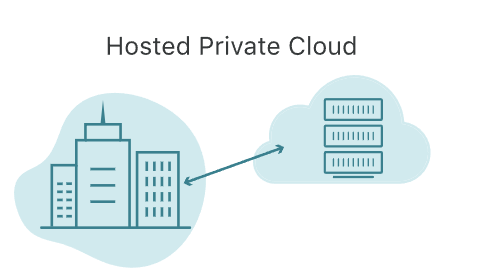
- Hosted: Dedicated to an organization, but maintained & Hosted by third party provider. The private cloud is hosted off premise, meaning the servers are not present in the organization itself, but third party manages and hosts remotely.
- Managed: The hardware and software are owned by the organization but managed by a third-party vendor.
- Virtual: Located within public cloud infrastructure, but totally isolated from other private clouds.
when do we need private cloud? This approach is taken when an organization has progressed and made significant investment in its cloud infrastructure or data must be kept on premise for regulatory reasons.
Advantages of Private Cloud:
They offer robust security, as organizational data can be securely stored behind a firewall, and single tenancy ensures complete physical separation of resources.
For highly regulated industries, private clouds provide the flexibility to store sensitive data in compliance with strict governance and regulatory requirements.
With the entire infrastructure under organizational control, companies can deploy advanced, customized solutions tailored to their specific operational and security needs—features that may not be readily available in public cloud environments.
Additionally, performance and availability can be optimized in private clouds due to physical proximity and the ability to design bespoke availability and redundancy measures.
 DBzTech-Technology Dossier
Leave a comment